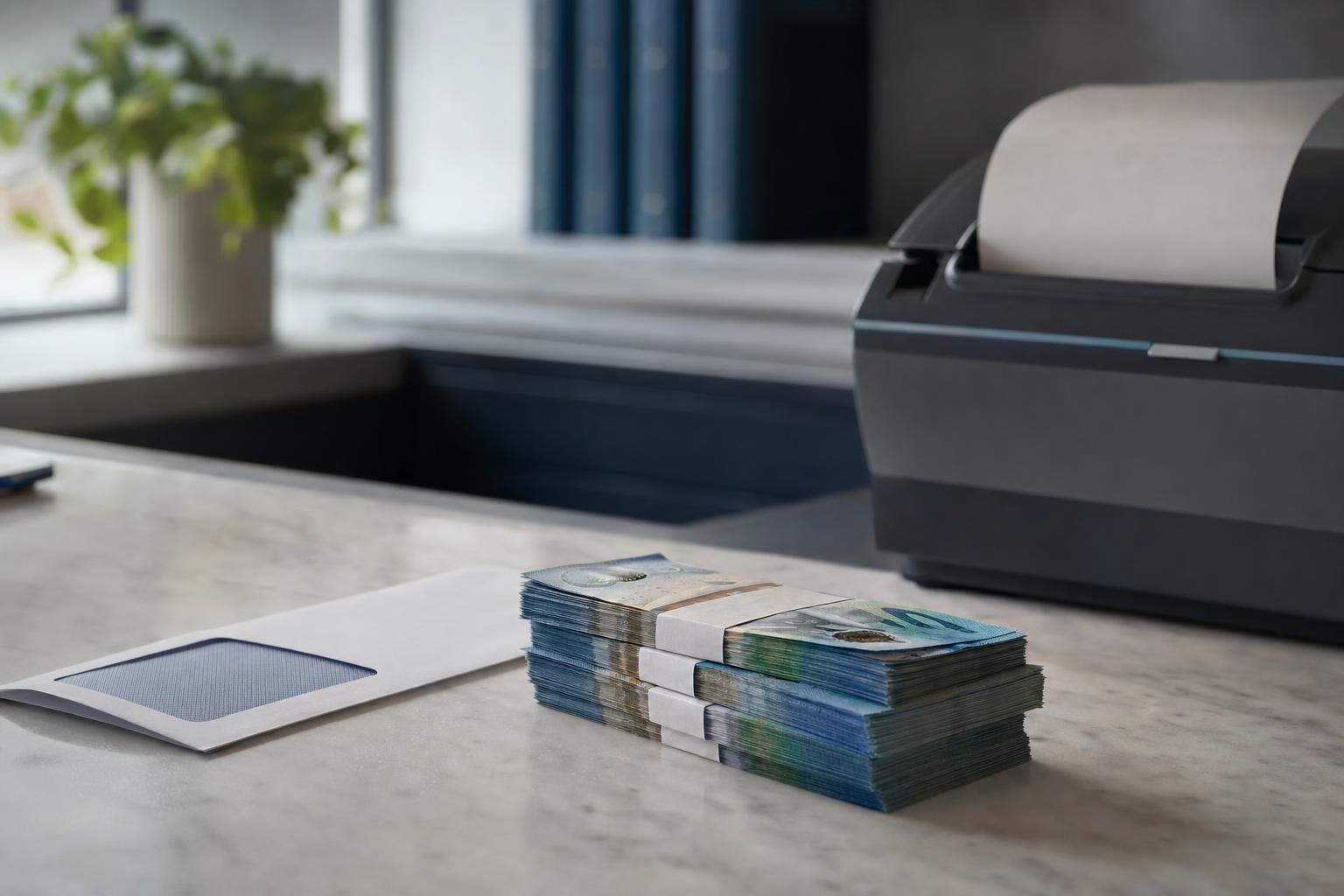
A threshold transaction report (TTR) must be lodged with AUSTRAC within 10 business days when a reporting entity receives or pays physical currency (notes and coins) of AU$10,000 or more, or the foreign currency equivalent, as part of providing a designated service. Bank transfers, cheques and card payments are not threshold transactions whatever the amount. Several cash payments kept just under the threshold are not a TTR but are a classic reason for a suspicious matter report. Dealers in precious metals and stones also report virtual asset transactions of AU$10,000 or more.
- Physical cash only. Transfers, PayID, BPAY, cheques and cards never trigger a TTR.
- AU$10,000 or more, or the foreign equivalent, received or paid as part of a designated service.
- Lodge within 10 business days through AUSTRAC Online; keep the record for seven years.
- Structuring (splitting cash to stay under the threshold) is itself a red flag for an SMR.
- Many small firms refuse cash at this level and say so in their program. That is a legitimate policy.
The rule in one paragraph
If, in providing a designated service, you receive or pay physical currency of AU$10,000 or more in a single transaction, you must lodge a threshold transaction report with AUSTRAC within 10 business days. Physical currency means notes and coins, Australian or foreign. The report identifies the customer, the amount and the transaction. It is a factual report, not an accusation; thousands are lodged every day, mostly by banks.
What does not count
- Electronic transfers of any size, including PayID, BPAY and international transfers. Your bank reports large international transfers itself.
- Cheques and bank cheques.
- Card payments.
- Cash received outside a designated service, for example a client paying a tax-return fee in cash. That is not a TTR, though your own program may still record it.
- Cash under AU$10,000, unless it is part of a pattern that looks like structuring.
Structuring: under the threshold on purpose
Splitting a payment into amounts below AU$10,000 to avoid a report is a criminal offence for the person doing it, and it is one of the clearest red flags for you. Two cash payments of AU$6,000 for the same matter a week apart are not a threshold transaction, but they should prompt your compliance officer to consider a suspicious matter report, which is due within 3 business days of the suspicion forming. The TTR checker above flags this case.
Foreign currency and virtual assets
Foreign notes count at their Australian dollar value on the day. Virtual assets are not physical currency, so a professional receiving a fee in crypto does not lodge a TTR, though an unclear source of funds is a due diligence and SMR question. Dealers in precious metals and stones are the exception: their AU$10,000 designated-service threshold expressly includes virtual assets, and linked transactions are aggregated.
Cash in the Tranche 2 professions
Most accountants, lawyers and conveyancers rarely see AU$10,000 in notes. Real estate agents sometimes do, usually as a deposit. Three practical policies appear in small-firm programs: refuse cash above a stated amount and direct clients to the bank; accept it, lodge the TTR and record the source; or accept it only into the trust account with a receipt and verification. Any of the three is compliant if it is written down and followed.
Lodging and keeping the record
TTRs are lodged through AUSTRAC Online. Keep the report, the receipt and the underlying records (who paid, when, for what, identification sighted) for seven years. The annual compliance report asks how many TTRs you lodged; the number should match your records.
TTR or SMR?
A TTR is mechanical: cash of AU$10,000 or more, report it, no judgement required. An SMR is about suspicion: anything, cash or not, that does not add up. A single transaction can need both. If AU$15,000 in cash arrives from a client who said they were paying by transfer and cannot explain the change, lodge the TTR within ten business days and consider an SMR within three.
Do I need to lodge a threshold transaction report?
The AU$10,000 rule is narrower than most people think. Check a payment in ten seconds.
General information about the AML/CTF Act and Rules, not legal advice. Many small firms simply decline cash at this level and say so in their program.
Questions people ask
- Do I have to report a bank transfer over $10,000?
- No. Threshold transaction reports cover physical currency only. Your bank reports large international transfers; domestic transfers are not reported by anyone unless they are suspicious.
- How much cash can a client pay before it is reported?
- Cash of AU$10,000 or more in one transaction, as part of a designated service, must be reported within 10 business days. Splitting payments to stay under the threshold is an offence and a red flag.
- Does a TTR mean the client is in trouble?
- No. It is a factual report that a large cash transaction happened. Banks lodge thousands a day. Only a suspicious matter report records a suspicion.
- Can my firm just refuse cash?
- Yes. Many small firms set a cash limit in their program and direct clients to deposit at a bank. Refusing cash does not remove other obligations.
- What if I paid the cash out, not received it?
- The rule covers cash received or paid. Paying out AU$10,000 or more in notes as part of a designated service is also a threshold transaction.
Read next
Sources
Official pages this page was checked against. The date is when we captured the page; the publisher may have updated it since.
- Threshold transaction reports · AUSTRAC, captured 07 June 2026
- Reporting to us · AUSTRAC, captured 16 Apr 2026
- Precious metals, stones and products designated services · AUSTRAC, captured 16 Apr 2026
- Record keeping overview · AUSTRAC, captured 12 Apr 2026
General information about Australian AML/CTF law, not legal advice. The Act, the Rules and AUSTRAC's guidance are the primary sources; check them before you rely on a date or a figure.